
A New Foundation for Modern Farming
Precision agriculture has moved far beyond its early reputation as a niche technological add‑on. It now forms the backbone of modern farming, integrating networks of sensors, autonomous drones, satellite constellations, and advanced analytics to manage crops at unprecedented spatial and temporal resolution. Instead of treating fields as uniform blocks, farmers can respond to the specific needs of each micro‑zone, adjusting irrigation, fertilization, and pest control with remarkable accuracy. The shift from blanket management to fine‑grained decision‑making has reshaped the economics and environmental footprint of agriculture, enabling higher yields with fewer inputs and less ecological disruption.
The Rise of Real‑Time Data Ecosystems
This transformation is driven by the rise of real‑time data ecosystems. Soil moisture probes, canopy temperature sensors, weather stations, and autonomous machinery generate continuous streams of information that feed into increasingly sophisticated AI models. These systems no longer simply describe what is happening in the field; they anticipate what will happen next. Predictive models integrate weather forecasts, soil dynamics, and plant physiology to identify stress events before they occur, giving farmers the ability to intervene proactively. Advances in edge computing allow drones and ground robots to process imagery on‑device, detecting anomalies instantly rather than waiting for cloud‑based analysis. Multispectral and thermal imaging can reveal water stress or disease more than a week before symptoms become visible to the human eye, shifting the entire paradigm from reactive management to preventative care.
The Convergence of Digital Tools and Genomics
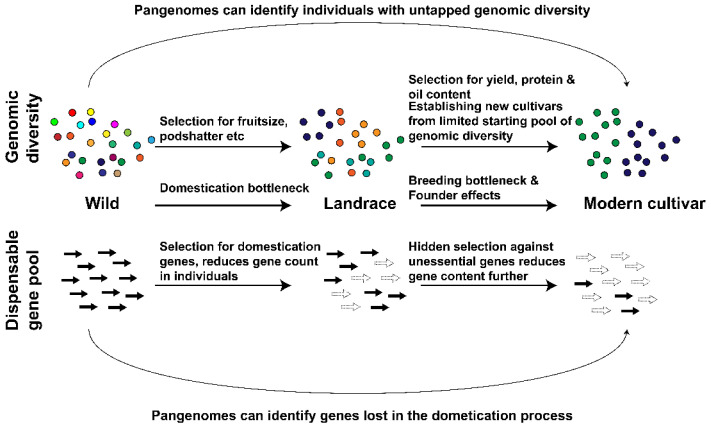
As these digital tools mature, they are converging with breakthroughs in genomics. Modern crop improvement increasingly relies on genomic selection, pan‑genome analyses, and CRISPR‑enabled trait development to produce varieties tailored to specific environmental conditions. Precision agriculture provides the environmental and phenotypic data that make these genomic tools more powerful, allowing breeders to design crops for hyper‑local adaptation rather than broad regional suitability. At the same time, soil microbiome profiling has emerged as a critical component of field management. By characterizing microbial communities that influence nutrient cycling, carbon sequestration, and disease suppression, farmers gain a deeper understanding of soil health and can adopt practices that enhance both productivity and ecological resilience. The integration of genomic data, microbiome insights, and high‑resolution field monitoring is creating a new model of agriculture in which crops, soils, and management strategies are co‑designed for specific landscapes.
Toward Sustainable Intensification
This convergence of robotics, AI, and genomics is arriving at a moment when global agriculture faces unprecedented challenges. Climate change is intensifying heat stress, altering rainfall patterns, and increasing the frequency of extreme weather events. At the same time, the world must produce more food while reducing greenhouse gas emissions, conserving water, and protecting biodiversity. Precision agriculture offers a credible pathway toward sustainable intensification: producing more with less, while maintaining the ecological functions on which long‑term productivity depends. Carbon‑aware farming practices, supported by sensor networks and modeling tools, allow farmers to quantify soil carbon fluxes and adopt regenerative strategies that build long‑term fertility. Water‑smart irrigation systems optimize water use without compromising yields, and biodiversity‑positive management uses remote sensing to monitor habitats and ecological corridors across agricultural landscapes. Robotics helps address labor shortages while reducing reliance on chemical inputs, further aligning productivity with sustainability.
A New Architecture for Food Production
Taken together, these developments signal a profound shift in how food is produced. Agriculture is becoming a data‑rich, adaptive, and resilient system—one capable of meeting the demands of a growing population while navigating the uncertainties of a changing climate. Precision agriculture is no longer simply a set of tools; it is an emerging architecture for the future of global food production.
References
Brodrick, P. G., et al. (2023). “Hyperspectral remote sensing for early detection of crop stress.” Remote Sensing of Environment.
Varshney, R. K., et al. (2021–2024). “Pan‑genomics and climate‑resilient crop breeding.” Nature Genetics; Trends in Plant Science.
Paustian, K., et al. (2022). “Soil carbon monitoring and carbon‑smart agriculture.” PNAS.
Zhang, C., & Kovacs, J. (2023). “AI‑enabled digital twins in precision agriculture.” Computers and Electronics in Agriculture.
Busby, P. E., et al. (2022). “Soil microbiome contributions to plant health and nutrient cycling.” Nature Reviews Microbiology.
FAO & CGIAR Reports (2023–2025). “Sustainable intensification and climate‑resilient agriculture.”
ESA & NASA SBG Mission Documents (2023–2025). “Next‑generation hyperspectral satellite capabilities for agricultural monitoring.”
