
A New Era of Precision in Biology
Genome editing has rapidly evolved from a scientific concept into one of the most transformative technologies in modern biology. At its core, it enables researchers to modify DNA with remarkable accuracy, targeting specific sequences within the genome and altering them with surgical precision. This ability to insert, delete, or replace genetic material is reshaping how we understand life at the molecular level and how we approach some of the world’s most pressing challenges in health, agriculture, and biotechnology.
Understanding the Molecular Scissors
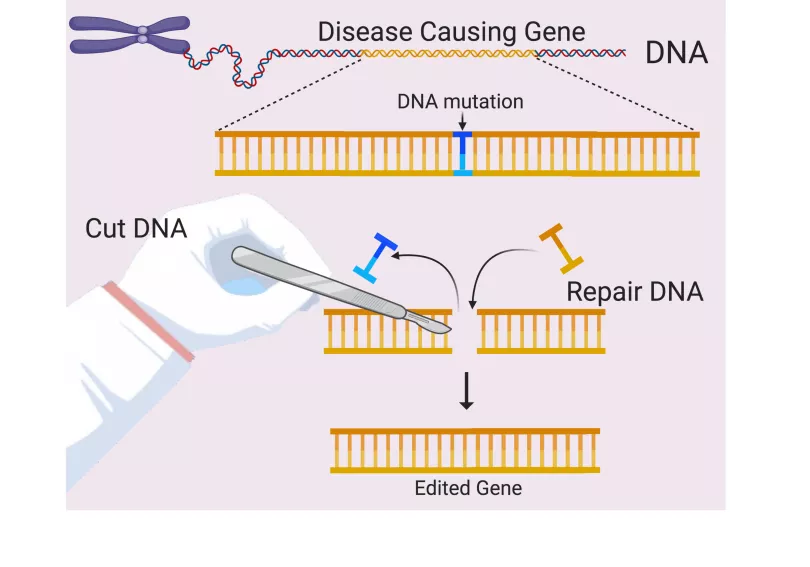
The featured image from UCL’s genome editing research page highlights the central mechanism behind this technology: the strategic cutting and repair of DNA. Genome editing relies on two fundamental steps—first, an enzyme cuts the DNA at a precise location; second, the cell’s natural repair machinery reconnects the strands, either restoring or modifying the sequence. Tools such as zinc-finger nucleases, TALENs, meganucleases, and especially CRISPR‑Cas9 act as molecular scissors capable of homing in on exact genetic coordinates. CRISPR‑Cas9, adapted from a bacterial antiviral defense system, has become the most widely used method due to its efficiency, versatility, and accessibility.
How Cells Rewrite Their Own Code
Once DNA is cut, the cell must repair it—and this is where editing truly happens. The image’s context reinforces two primary repair pathways. End joining, the quicker but less precise method, often introduces small insertions or deletions that can disrupt a gene’s function. This is useful when the goal is to switch off a faulty gene. Directed repair, on the other hand, uses a template—either the cell’s own DNA or a synthetic donor sequence—to correct or replace a mutation. This pathway offers the possibility of restoring normal gene function, making it especially promising for treating inherited disorders.
From Lab Bench to Real-World Impact
The potential applications of genome editing extend far beyond the laboratory. In basic research, it allows scientists to probe gene function with unprecedented clarity. In agriculture, it opens the door to crops engineered for resilience, nutrition, and sustainability. In medicine, its promise is profound: correcting disease‑causing mutations at their source. The featured image’s accompanying research highlights real clinical progress, including the first in‑human CRISPR‑Cas9 treatment for an inherited retinal disease, marking a milestone in translating genome editing from concept to therapy.
Challenges on the Path to Therapeutic Reality
Despite its promise, genome editing is not without hurdles. Delivering editing tools safely and efficiently into the right cells remains a major challenge. Ensuring accuracy—avoiding unintended edits elsewhere in the genome—is equally critical. Research groups, such as those at UCL and the McPherson Eye Research Institute, are actively exploring these issues, particularly in the context of retinal diseases like Bestrophinopathies. Their work underscores both the potential and the complexity of bringing genome editing into routine clinical practice.
A Future Defined by Possibility
As genome editing technologies continue to advance, they are redefining what is possible in science and medicine. The ability to precisely modify DNA is not just a technical achievement—it is a gateway to understanding disease, improving global food security, and ultimately transforming human health. The journey from discovery to application is ongoing, but each breakthrough brings us closer to a future where genetic diseases can be corrected at their root and biological innovation becomes a cornerstone of progress.
Picture source: https://www.ucl.ac.uk/brain-sciences/ioo/research/research-labs-and-groups/carr-lab/research/research-treatments/genome-editing
